Home     About Us     Contact Us

Saluang is a traditional musical instrument of Minangkabau

Saluang is a traditional musical instrument of Minangkabau, West Sumatra. Which wind instrument made of thin bamboo or gutters (Schizostachyum brachycladum Kurz). Minangkabau people believe that the best material to make saluang derived from the gutter to gutter clothesline fabric or found floating in a river. These tools include the musical instrument flute class, but more simple to make, simply by punching holes in the gutter with four holes. Saluang length approximately 40-60 cm, with a diameter of 3-4 cm. As for other uses of the gutter is the place to make lemang, one of Minangkabau traditional food.

Saluang legendary players named Idris Sutan Syamsimar Sati with the singer.

The virtues of the players are able to play this saluang saluang with blowing and breathed together, so that the blower saluang can play the instrument from the beginning of the end of the song without end. Breathing mode was developed with continuous exercise. This technique is also a technique called manyisiahkan angok (aside breath).

Each village in Minangkabau develop ways saluang blowing, so that each village has its own style. Examples of the style that is Singgalang, Pariaman, Solok Salayo, Koto Tuo, Suayan and Pauah. Style Singgalang considered quite difficult to be played by beginners, and usually Singgalang tone is played at the beginning of the song. Style is the saddest sound of Ratok Solok Solok area.

Tabuik, A Ceremony of Minangkabau

Tabuik (Indonesia: Ark) is a local celebration to commemorate Ashura, the death of Imam Hussein, grandson of Muhammad, which was conducted by the Minangkabau people in West Sumatra coast, especially in Pariaman. This festival includes displays back the Battle of Karbala, and Tassa drums and dhol. Tabuik is a term for a bier carried during the procession ceremony. Despite its humble beginnings is a Shiite ceremony, but most residents in Pariaman and other areas that are doing similar ceremonies, mostly Sunni adherents. In Bengulu also known by the name of Ark.

Tabuik to the sea anchor ceremony conducted every year on the 10th of Muharram Pariaman since 1831. The ceremony was introduced in this area by Shiite Muslim forces from the Indian Tamils, who placed here and then settled during British rule in the western part of Sumatra .

source : www.wikipedia.org

Supernatural

Is anything supernatural phenomenon or occurrence that is not common or not common or considered beyond the limits of human ability in general and not in accordance with the laws of nature. Actually, this ability can be obtained by developing the chakras or energy centers in the Javanese tradition tubuh.Dalam Supernatural forces can be dug with a particular tirakat lelaku to obtain an incredible ability beyond reason, like brajamusti / Bondowoso adalaah supernatural science that can have the power and punch mematikan.Salah one instance in my experience brajamusti test time by making a blow to the banana tree that was not nothing, but strangely the next day the dead trees dry out. if it was in the wrong use of a result hitting people very fatal.Daya supernatural Javanese tradition is still a lot of people in hurry, but to get tersebet ability is not as easy as turning the palm of the hand, there must be certain tirakatan that should be lived but that needs attention is the mentor / teacher who really understood in terms of the supernatural. Supervising Teacher job is to lead us to make certain that the redemption lelaku supernatural power that we wish we kuasai.Salah one supranaturalis figures who are experts on the science order is Ajengan Mas Javanese tradition of Han (chairman of the Foundation Alternative Metaphysics "Bhakti Shakti")

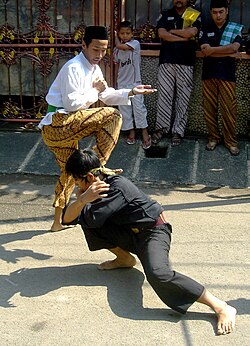
Pencak Silat, an Indonesian Original Martial Arts


Pencak silat is a martial sport that needs a lot of concentration. There are the influence of Chinese culture, Hinduism, and Buddhism in the martial arts. Usually every region in Indonesia have a typical martial arts school. For example, Java famous West Cimande flow and Cikalong, in Central Java and the flow of Merpati Putih in East Java, there is the flow of Shielding Yourself. Every four years there Pencak silat matches in the National Sports Week. Outside of Indonesia also have a lot of fans pencak silat like in Australia, the Netherlands, Germany, and America. At the national level sport through games and sports martial arts became one of the archipelago unifying tool, even for a nation's fragrances, and became the nation's identity. It is well known together that Pencak silat sports and games have competed at an international scale, which means that Indonesia is known one of them is through exercise and martial arts games. In Indonesia, a lot of streams in the martial arts, with much of this flow will show the cultural wealth of society in Indonesia with the values in it. Pencak silat is a very high asset value. To the East is physically smaller, more fragile, its main weapon is the technique. Both techniques martial procedures, as well as techniques to improve physical skill using supernatural powers. That is why the Eastern martial Oran many different forms.

source : www.wikipedia.org

Jaipong Dance, Stay conserved by the Communities in West Java

Jaipongan is a genre of dance that was born from the creativity of an artist from Bandung, Gugum Gumbira. His attention to folk art that one of them is making Tilu Tap right to know and recognize motion patterns perbendaharan dance traditions that existed at Kliningan / Bajidoran or Tap Tilu. Opening gestures, pencugan, nibakeun and several kinds of motion of several arts mincid above have enough inspiration to develop the dance or the arts that is now known by the name Jaipongan.

Prior to this performing art forms emerged, there was some influence behind the dance form this association. In West Java, for example, is the influence of social dance Ball Room, which is usually in a dance-dance association could not be separated from existence and pamogoran ronggeng. Ronggeng in social dance is no longer functioning for ceremonial events, but for entertainment or a way of hanging out. Ronggeng existence in the performing arts attraction that invites sympathy for the pamogoran. For example on Tilu Tap dance is so well known by the Sundanese people, it is estimated this art popular around the year 1916. As the folk performing arts, this art is only supported by simple elements, such as waditra that includes fiddle, drums, two kulanter, three percussion, and gongs. Similarly tarinya motions that do not have a standard pattern of motion, simple costumes dancer as a reflection of democracy.

Along with the waning of the above art forms, the former pamogoran (audience who actively participate in the performing arts Tap Tilu / Doger / Tayub) switched his attention on the performing arts Kliningan, which in the North Coast region of West Java (Karawang, Bekasi, Purwakarta, Indramayu, and Subang ) known as Kliningan Bajidoran tarinya patterns or events that the show has some similarities with the previous art (Tap Tilu / Doger / Tayub). In the meantime, the existence of mask dances in Banjet quite popular, particularly in Donegal, where several motion patterns Bajidoran taken from the dance in this Banjet Mask. In koreografis dance is still reveals patterns tradition (Tap Tilu) which contain elements of the opening gestures, pencugan, and several kinds of motion nibakeun mincid which in turn become the basis Jaipongan dance creation. Some basic motions other than Tap dance Jaipongan Tilu, Ibing Bajidor and Mask Banjet is Tayuban and Pencak Silat.

The emergence of dance works Gumbira Gugum initially called Tap Tilu developments, which are due to basic dance was developed from Tilu Tap. The first work Gugum Gumbira still very thick with color ibing Tilu Tap, both in terms of choreography and iringannya, who later became a popular dance called Jaipongan.

Evolve

Jaipongan works first began to be known by the public is dance "Leaves Pulus Keser Bojong" and "Rendeng Bojong" both of which are types of dance and dance partner's daughter (son and daughter). From it emerged a few dance dancer Jaipongan a reliable name like Tati Saleh, Yeti Mamat, Eli Somali, and Pepen Dedi Kurniadi. Early emergence of these dances could be discussion, the central issue is the movement of the erotic and vulgar. But from the few print media exposure, starting Gumbira Gugum known to the public, especially after the dance Jaipongan in 1980 staged at the central station TVRI Jakarta. The impact of the popularity of the more increase the frequency of performances, either on television, the celebration and feasts were held by the private sector and government.

Attendance Jaipongan substantial contribution to the activist art of dance for more active types of folk dances that explore previously less attention. With the emergence of dance Jaipongan, used by activists to hold a dance art dance classes Jaipongan, also used by employers as pubs, night-killer invited guests, where the further development of this kind of business opportunities created by actuators business of dance as an economic empowerment Dance Studio's name or groups in some areas of West Java, for example in Subang with Jaipongan style "kaleran" (north).

Jaipongan characteristic style kaleran, namely the fun, erotic, humorous, excitement, spontaneity, and simplicity (naturally, whatever they are). This is reflected in the pattern of presentation of dance on the show, there is a given pattern (Pattern Ibing) as in art Jaipongan in Bandung, also there are also dances that are not cut is (Ibing Saka), for example in art Jaipongan Subang and Karawang. This term can be found in Jaipongan kaleran style, especially in the area of Subang. In its presentation, this kaleran Jaipongan style, as follows: 1) Tatalu; 2) Flower Bluebird; 3) Fruit kawung Gopar; 4) Dance Opening (Ibing Pattern), usually sung by a single dancer or Sinden Tatandakan (sinden attack but can not sing but dance songs sinden / interpreter kawih); 5) Jeblokan and Jabanan, is part performance when the audience (bajidor) sawer money (jabanan) while greeting stickers. Jeblokan term is defined as couples who settled between sinden and the audience (bajidor).

A further development occurred in taahun dance Jaipongan 1980-1990's, where Gugum Gumbira create other dances such as Toka-toka, Setra Sari, Sonteng, Pencug, Egret dazed, convoy, procession Codiaeum variegatum Leaves, Rawayan, and Dance kawung Anten. From these dances appeared several dancers Jaipongan reliable among others Iceu Effendi, Yumiati Mandiri, Miming Mintarsih, Nani, Erna, Mira Tejaningrum, Ine Dinar, Ega, Nuni, Cepy, Agah, Aa Suryabrata, and Asep.

This adult dance Jaipongan quotable as one identity keseniaan West Java, this is apparent on several important events relating to visitors from foreign countries who came to West Java, it was greeted with a dance performance Jaipongan. Similarly, art missions to foreign countries, always equipped with Jaipongan dance. Dance Jaipongan many other art-influenced art in the West Java communities, both in the performing arts, puppets, gamelan, Genjring / flying, Kacapi jaipongan, and almost all public performances as well as on modern dangdut music which is collaborated with the art Jaipong Pong-Dut. Jaipongan has diplopori by Mr. Nur & Leni

Joglo, Traditional House of Java, Indonesia

Joglo is a traditional house of Javanese society. Consists of two main parts namely Pendapa and dalem. This part is the front Joglo pendapa which have a large room with no insulation, insulation, normally used to receive guests or a playroom where children and families to relax. Part palace is part of a room in the house bedroom, living room and other rooms that are more privacy. The characteristics of the building is at roof Pendapa towering like a mountain.


Variation Type Joglo Building

1. Joglo pyramid jokes or "joglo jokes."
2. Joglo sinom
3. Joglo Jompongan
4. Joglo musicians
5. Joglo Mangkurat
6. Joglo Hageng
7. Semar Joglo Tinandhu

Spread

Because of its cultural affinity this building also prevalent in Madura and Bali island.

Nyale, A Traditional Ceremony which is still preserved in NTT, Indonesia

Nyale (or called Odor nyale in Lombok) is a ceremony to welcome the hunting of marine worms Pasola. Usually this event diselenggrakan around February and March. To greet the public usually has conducted various rituals of the far-distant days. One was conducted in their homes, the night before the ceremony performed.

Some rituals are carried out usually is cut into the chicken and make a diamond. This is because the ritual is closely related to activities Pasola to see the good and bad fate of someone who will take part in Pasola.

The indigenous leaders or Rato see the results of processed chicken and diamond. If the roast chicken was bled from the intestines, and the diamond that has been cooked, there is a red, or brownish, then this is believed to be a bad sign. Namely Pasola accompanying family members, will have hazards, such as suffering wounds or even death.

As the evening progressed, the Rato on duty watching the emergence of the full moon, soon getting ready to wear oversized clothes Rato (Or commonly called rowa Rato). This ritual is usually done by praying on the tomb stone (grave) and is facing the full moon.

By facing the full moon, the Rato can ensure accuracy and position of the moon, and the state of the ocean waves at the beach. From where will be decided it is time nyale. Once nyale or marine worms have seen, all the residents who had gathered since dawn, began the hunt.

This tradition is usually performed by people of Bali and Lombok but usually not accompanied by Pasola.

source : www.wikipedia.org

Sasando, traditional musical instruments of Nusa Tenggara Timur, Indonesia

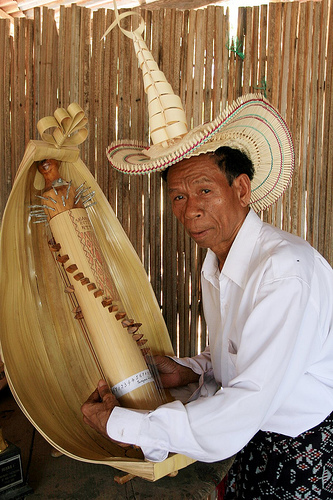
Sasando is a stringed musical instrument. Musical instruments is derived from the island of Rote, East Nusa Tenggara.

Sasando there are similar forms with other stringed instruments like guitar, violin and harp.

The main part of the long tubular sasando usually made of bamboo. Then in the middle, a circle from top to bottom are given lump-lump where the strings (the strings) that stretched across the tube, from top to bottom rests. Lump-lump gives a different tone to each chord passages. Then this sasando tube placed in a container made from a kind of woven palm leaves made out like a fan. This container is where sasando resonance.


source : www.wikipedia.org

Still preserved Kolintang Musical Instruments

Kolintang or kulintang is a typical musical instrument Minahasa, North Sulawesi. Kolintang made of local wood is lightweight but strong like an egg, bandaran, detention, wood kakinik chrysolite, and which have a parallel fiber construction.

Kolintang name comes from her voice: Tong (low tone), ting (high tone) and pliers (normal tone). In the local language, call "Let's do TONG TANG Ting" is: "Mangemo kumolintang". Call it eventually turned into kolintang said.

Some well-known groups like Kadoodan, Tamporok, Mawenang already exist more than 35 years. Kolintang makers spread in Minahasa and on the island of Java, one of the famous author Peter Kaseke kolintang

Blangkon

Blangkon is the headgear made of batik, and used by men as part of traditional Javanese clothes. According to its form, blangkon divided into four: blangkon Ngayogyakarta, blangkon Surakarta, blangkon Kedu, and Blangkon Banyumasan. For some types of blangkon there that use a lump on the back blangkon. This bulge of male hair model indicates that era often tie their long hair in the back of the head, so that the protruding section in the back blangkon.

Blangkon iket actual practical form of which is the headgear made of batik and used by men as part of traditional Javanese clothes. For some types of blangkon there that use a lump on the back blangkon called mondholan. Mondholan this indicates that the male hair models who often tie their long hair in the back of the head, so that the protruding section in the back blangkon. Hair coil should be tight so as not easily separated.

Now twist the long hair that becomes mondholan been modified because the people are mostly short-haired with a mondholan sewn directly on the back blangkon. Trepes mondholannya Blangkon Surakarta or Yogyakarta-style sprawl is mondholan round like dumplings.

sourece : www.wikipedia.org

Powered by Blogger